
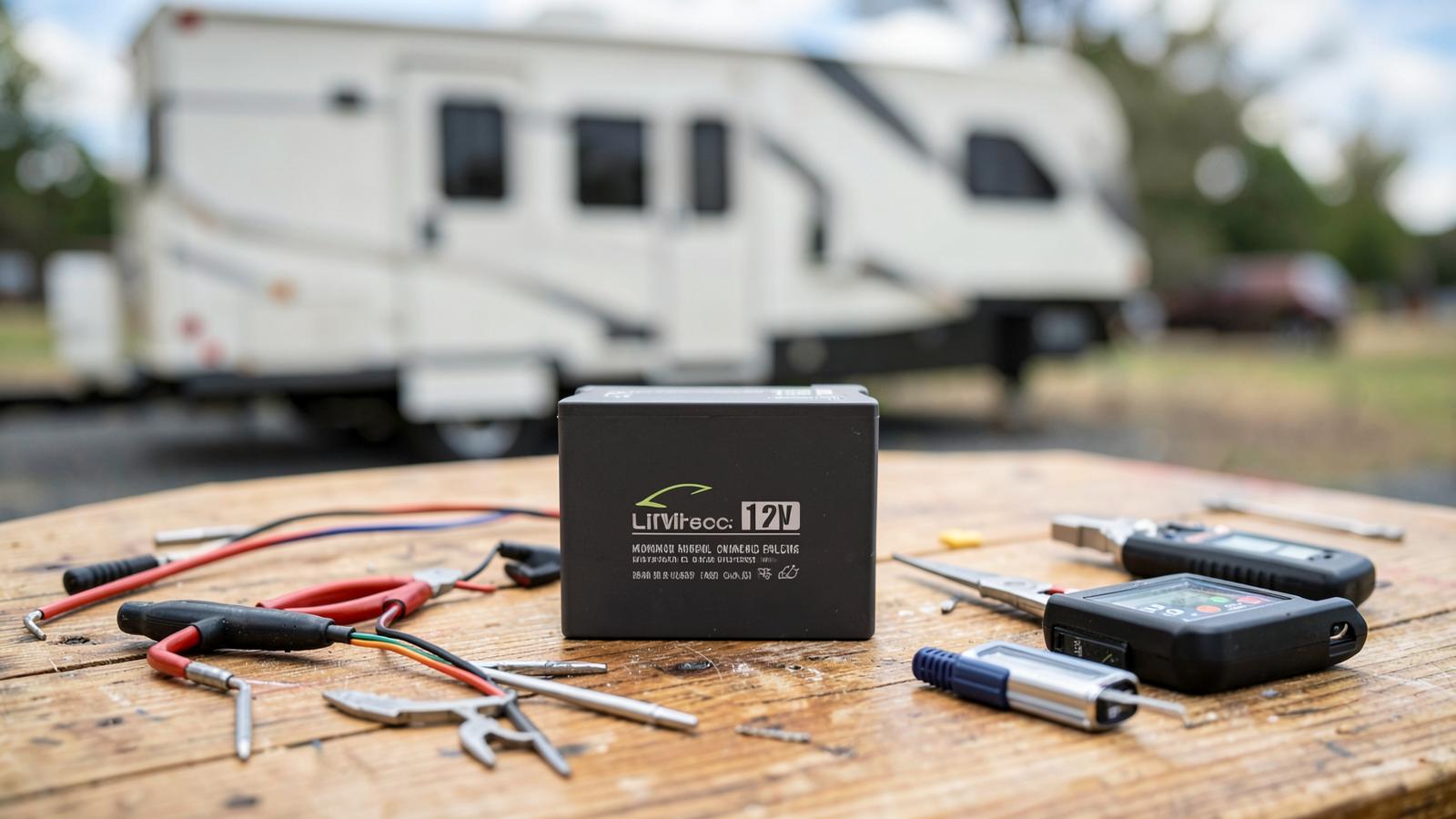
Value-brand LiFePO4 batteries changed the RV lithium conversation. Five years ago the choice was lead-acid or an expensive premium lithium bank; now a 100Ah LiFePO4 battery with an integrated BMS sits at a price that makes a two-battery bank realistic for ordinary weekend owners. The LiTime 12V 100Ah is one of the most frequently discussed examples.
This review examines what you get at that price, what the value tier tends to give up, and how to buy sensibly here. It is a research-based assessment drawn from manufacturer specifications and published owner experience rather than in-house electrical testing.
The product at a glance
Researched and compared by our editors. Prices move constantly, so check the retailer for today's price.
Affiliate disclosure — As an Amazon Associate I earn from qualifying purchases. TopPremiumPicks may also earn commissions from other retailers. This costs you nothing extra and does not influence our recommendations.
Reviewed Here
LiTime
LiTime 12V 100Ah LiFePO4 Battery
Best for: Budget-conscious lithium conversions
Key feature: Built-in BMS with over-charge and over-discharge protection
A value-tier LiFePO4 battery manufacturer-rated at 100 amp-hours with a built-in battery management system, positioned as a lower-cost entry into RV lithium conversions.
Mid-Range ($$)| Product | Our pick | Best for | Price tier | Key feature | Check price |
|---|---|---|---|---|---|
LiTime LiTime 12V 100Ah LiFePO4 Battery | Reviewed Here | Budget-conscious lithium conversions | Mid-Range ($$) | Built-in BMS with over-charge and over-discharge protection |
Price tiers $ Budget · $$ Mid-range · $$$ Upper mid-range · $$$$ Premium · $$$$$ Flagship. We show tiers rather than prices — check Amazon for the current price.
The full review
Reviewed Here
LiTime
LiTime 12V 100Ah LiFePO4 Battery
A value-tier LiFePO4 battery manufacturer-rated at 100 amp-hours with a built-in battery management system, positioned as a lower-cost entry into RV lithium conversions.
Why it stands out
Substantially lower price than premium lithium brands while still offering LiFePO4 chemistry and BMS protection.
Best for
Budget-conscious lithium conversions
Not ideal for
Buyers who prioritize the longest manufacturer track record
Key features
- ◆Built-in BMS with over-charge and over-discharge protection
- ◆Low-temperature cutoff protection per manufacturer specification
- ◆Standard 12V drop-in form factor
Pros
- Lower price than premium lithium competitors
- Standard drop-in size
- BMS protection included
Considerations
- Less established long-term track record
- Manufacturer support network smaller than legacy brands
Final verdict
LiTime 12V 100Ah LiFePO4 Battery suits buyers who prioritise budget-conscious lithium conversions. Worth knowing: Shorter market history than the most established RV lithium brands.
What the specification actually delivers
The core of the product is unremarkable in the best sense: LiFePO4 cells, 12V nominal, 100Ah rated capacity, a built-in BMS with over-charge, over-discharge and low-temperature charge protection, in a standard drop-in case at roughly 22 pounds per the manufacturer.
That combination covers what most RV owners need from a house battery. The chemistry is the same chemistry premium brands use, and the usable-capacity advantage over AGM applies equally here.
Where the value tier gives something up
Two areas separate value lithium from premium lithium, and neither is chemistry. The first is time in market: a shorter history means less accumulated evidence about how these packs behave at year seven or eight. The second is support depth — warranty handling, parts and technical response are typically thinner than long-established brands offer.
There is also more variability in continuous discharge ratings and BMS behaviour across the value tier than the headline amp-hour figure suggests. If you plan to run a large inverter, check the continuous discharge current specification rather than assuming that 100Ah implies a particular current capability.
Install and charging considerations
As with any lithium swap, the battery is the easy part. Your converter or charge controller needs a lithium profile, and charging from the tow vehicle usually calls for a DC-DC charger to protect the alternator and deliver an appropriate profile.
If you are building a multi-battery bank, buy the batteries together and from the same production run where possible. Mixing batteries of different ages or brands in parallel produces uneven loading.
Who this is for
This is the sensible choice for a first lithium conversion, for weekend and seasonal use, and for anyone who would rather put the savings into solar capacity or an inverter than into brand assurance.
It is less appropriate where the bank is genuinely mission-critical — medical equipment, remote full-timing far from support, or a commercial installation where downtime has a cost.
Keep reading
Frequently asked questions
Final verdict
The LiTime 100Ah makes the strongest version of the value-lithium argument: the same chemistry and the same practical usable capacity as premium packs, with less accumulated track record and lighter support. For most weekend and seasonal RV owners, that is a reasonable trade.
Editorial Team
TopPremiumPicks Editorial Team
The TopPremiumPicks Editorial Team researches and compares premium products across multiple categories using manufacturer specifications, professional reviews and customer feedback. Our guides are research-based and do not represent hands-on product testing.