
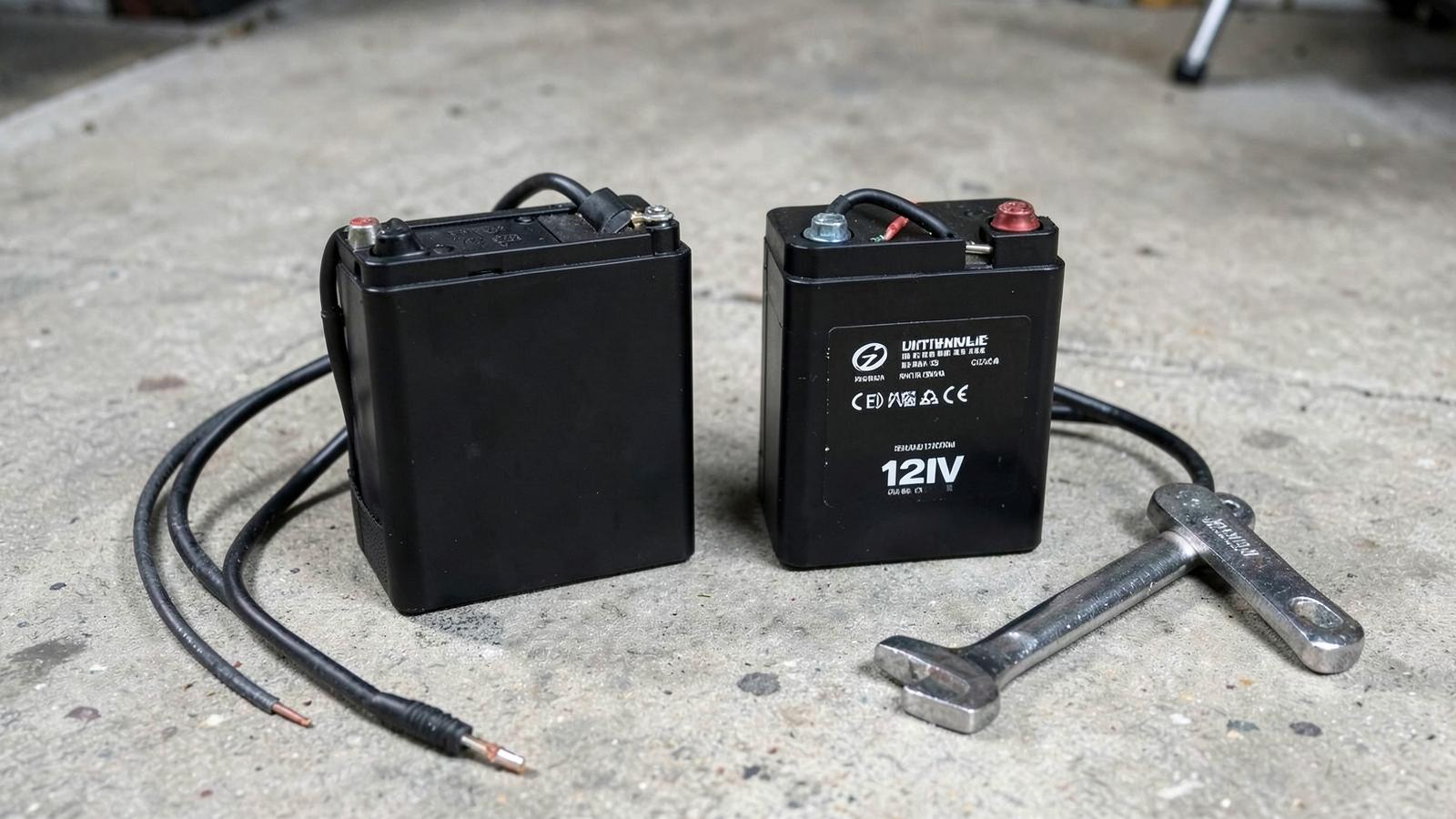
Both of these are 12V 100Ah LiFePO4 batteries with built-in battery management systems and a drop-in form factor. That is not marketing convergence; it is genuinely the same chemistry doing the same job, and both will give you far more usable capacity than an AGM battery of the same rating.
Both also sit in the same value price tier, which makes this a closer call than premium-versus-budget comparisons. This comparison sets out what actually differs — configuration options, support depth, track record, and availability — so you can decide which one your build belongs on.
The two products compared
Product details come from our central product records. Prices change constantly, so check the retailer for the current price.
Affiliate disclosure — As an Amazon Associate we earn from qualifying purchases. TopPremiumPicks may also earn commissions from other retailers. This costs you nothing extra and does not influence our recommendations.
Product A
ECO-WORTHY
ECO-WORTHY 12V 100Ah LiFePO4 Deep Cycle Battery
Budget ($)
Best for: buyers wanting the widest range of sizes and variants in the value tier
A value-tier LiFePO4 house battery manufacturer-rated at 100 amp-hours with a built-in 100A battery management system, widely sold for RV, marine and off-grid use.
Product B
LiTime
LiTime 12V 100Ah LiFePO4 Battery
Mid-Range ($$)
Best for: first conversions and weekend use on a budget
A value-tier LiFePO4 battery manufacturer-rated at 100 amp-hours with a built-in battery management system, positioned as a lower-cost entry into RV lithium conversions.
Comparison at a glance
| Category | ECO-WORTHY 12V 100Ah | LiTime 12V 100Ah | Edge |
|---|---|---|---|
| Chemistry | LiFePO4 | LiFePO4 | Tie |
| Rated capacity | 100Ah | 100Ah | Tie |
| Weight | See manufacturer specification | Approx. 22 lbs (manufacturer spec) | Tie |
| BMS protection | 100A BMS with low-temperature charge protection | Includes low-temperature charge cutoff | Tie |
| Range of variants | Multiple sizes, mini and heated options | Broad range including heated and Bluetooth models | Tie |
| Track record in RV use | Established value-tier presence | Established value-tier presence | Tie |
| Price tier | Budget | Mid-Range | ECO-WORTHY |
| Check price | Check Price on Amazon | Check Price on Amazon |
What is genuinely the same
Both are LiFePO4, both are rated 100Ah at 12V, and both make the large majority of that rating usable per cycle — the property that makes lithium worth the conversion in the first place. Both include a BMS with over-charge, over-discharge and low-temperature charge protection.
In everyday camping, a bank built from either will behave the same way: deeper usable capacity than lead-acid, far less weight, and a flatter voltage curve that keeps appliances happy until the bank is genuinely low.
What genuinely differs
The honest answer is: less than marketing suggests. Both brands occupy the same value tier, publish similar specifications, and offer heated and compact variants. The practical differences come down to the specific variant that fits your battery bay, the configuration options you need, and which is better priced or better stocked when you buy.
Support depth is comparable between them — both are lighter operations than the premium tier, which is the trade the value price represents. Neither position is evidence of a problem; it is the reason the tier costs less.
Framing it as risk, not quality
The useful question is not which battery is better but what a failure would cost you. If a dead bank means a cancelled weekend, either value option is a rational purchase. If it means spoiled medication or a stranded full-timer far from support, the premium tier is buying insurance, not prestige.
A middle path exists: build the bank with value cells and keep the total spend low enough that a spare battery is affordable. Two value batteries plus a contingency plan can beat one premium battery with none.
Which should you buy?
Buy the ECO-WORTHY if its specific dimensions, variant range or current pricing fits your build better — it is a strong default in the value tier and widely stocked.
Buy the LiTime for the same reasons in reverse. For most buyers the deciding factors are bay dimensions, heated-variant availability, and which brand is offering the better price on the day you order.
Keep reading
Frequently asked questions
Final verdict
ECO-WORTHY and LiTime are the two default answers to the same question: full LiFePO4 capacity at a value price. Pick whichever variant fits your bay and budget on the day — then spend the savings against the premium tier on a lithium-capable converter and solar.
Best for buyers wanting the widest range of sizes and variants in the value tier
ECO-WORTHY 12V 100Ah LiFePO4 Deep Cycle Battery
Full LiFePO4 usable capacity and BMS protection at one of the most accessible prices in the category.
Best for first conversions and weekend use on a budget
LiTime 12V 100Ah LiFePO4 Battery
Substantially lower price than premium lithium brands while still offering LiFePO4 chemistry and BMS protection.
About Our Research
TopPremiumPicks researches and compares products using manufacturer information, published specifications, reputable sources, retailer information and documented customer feedback.
How We Review Products