
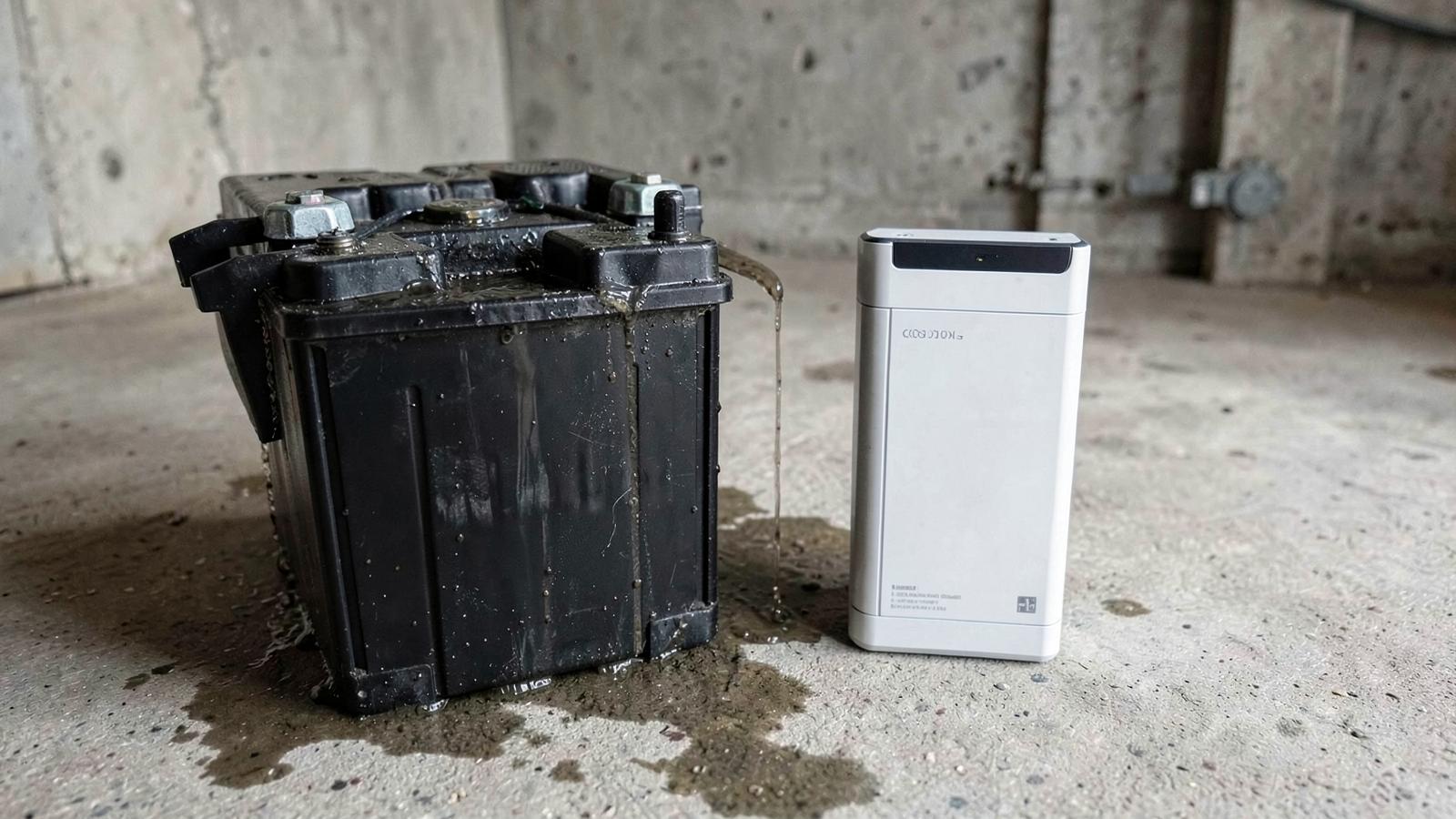
Lithium and lead-acid batteries are often marketed as a simple upgrade decision, but the two chemistries behave differently enough that the right choice really does depend on how you use your RV. The comparison below breaks the decision down into the factors that most affect real-world camping — how much power you can actually use, how long the battery lasts, and what it costs upfront versus over time.
Neither chemistry is objectively better in every situation. AGM remains a reasonable, lower-cost choice for occasional camping with regular access to shore power or a generator, while lithium's advantages compound for owners who camp off-grid often enough to use the extra usable capacity and cycle life.
Comparison at a glance
| Factor | AGM Lead-Acid | LiFePO4 Lithium |
|---|---|---|
| Usable capacity (of rated Ah) | Roughly 50% recommended | Roughly 80-100% typical |
| Manufacturer-rated cycle life | Commonly several hundred cycles | Commonly rated in the thousands of cycles at partial DoD |
| Weight (100Ah class) | Roughly 60-65 lbs typical | Roughly 22-30 lbs typical |
| Charging speed | Slower, multi-stage charging recommended | Generally faster, accepts higher charge current |
| Cold-weather charging | Tolerates charging in freezing temperatures | Most BMS units block charging below freezing |
| Upfront cost tier (100Ah) | Budget to Mid-Range | Upper Mid-Range to Flagship |
Usable capacity and real-world runtime
Because AGM batteries are generally kept above roughly 50% state of charge to preserve their lifespan, a 100Ah AGM battery delivers meaningfully less day-to-day usable capacity than a 100Ah LiFePO4 battery, which can typically be discharged much deeper. This means a lithium bank of the same rated amp-hours as an AGM bank will generally provide noticeably more usable runtime between charges.
Lifespan and cost over time
AGM batteries cost less to purchase but are commonly rated for far fewer charge cycles than lithium, meaning a lithium battery, despite its higher upfront price, can work out cheaper per cycle over a multi-year ownership period for owners who cycle their battery frequently. Occasional campers who rarely deep-cycle their battery are less likely to reach the point where this cost trade-off favors lithium.
Weight and installation considerations
Lithium batteries are commonly less than half the weight of an AGM battery with the same rated amp-hours, which matters for RVs close to their cargo weight limit or for owners planning a multi-battery bank. AGM's greater weight and volume can also make a larger bank harder to fit within an RV's designed battery compartment.
Cold-weather behavior
AGM batteries can generally be charged in freezing temperatures, though their usable capacity is reduced in cold weather. Most LiFePO4 batteries include a built-in BMS that blocks charging below freezing to protect the cells, though discharging (using stored power) is typically still possible; some premium lithium models add self-heating elements to work around this limitation.
Keep reading
Frequently asked questions
Final verdict
AGM remains a reasonable, lower-cost choice for RVers who camp occasionally and have regular access to shore power or a generator, while LiFePO4 lithium's deeper usable capacity, lighter weight, and longer manufacturer-rated cycle life make it the stronger choice for frequent off-grid or full-time use, despite the higher upfront price. The right answer depends on how often you will actually use the extra capacity and cycles lithium provides.
Editorial Team
TopPremiumPicks Editorial Team
The TopPremiumPicks Editorial Team researches and compares premium products across multiple categories using manufacturer specifications, professional reviews and customer feedback. Our guides are research-based and do not represent hands-on product testing.