
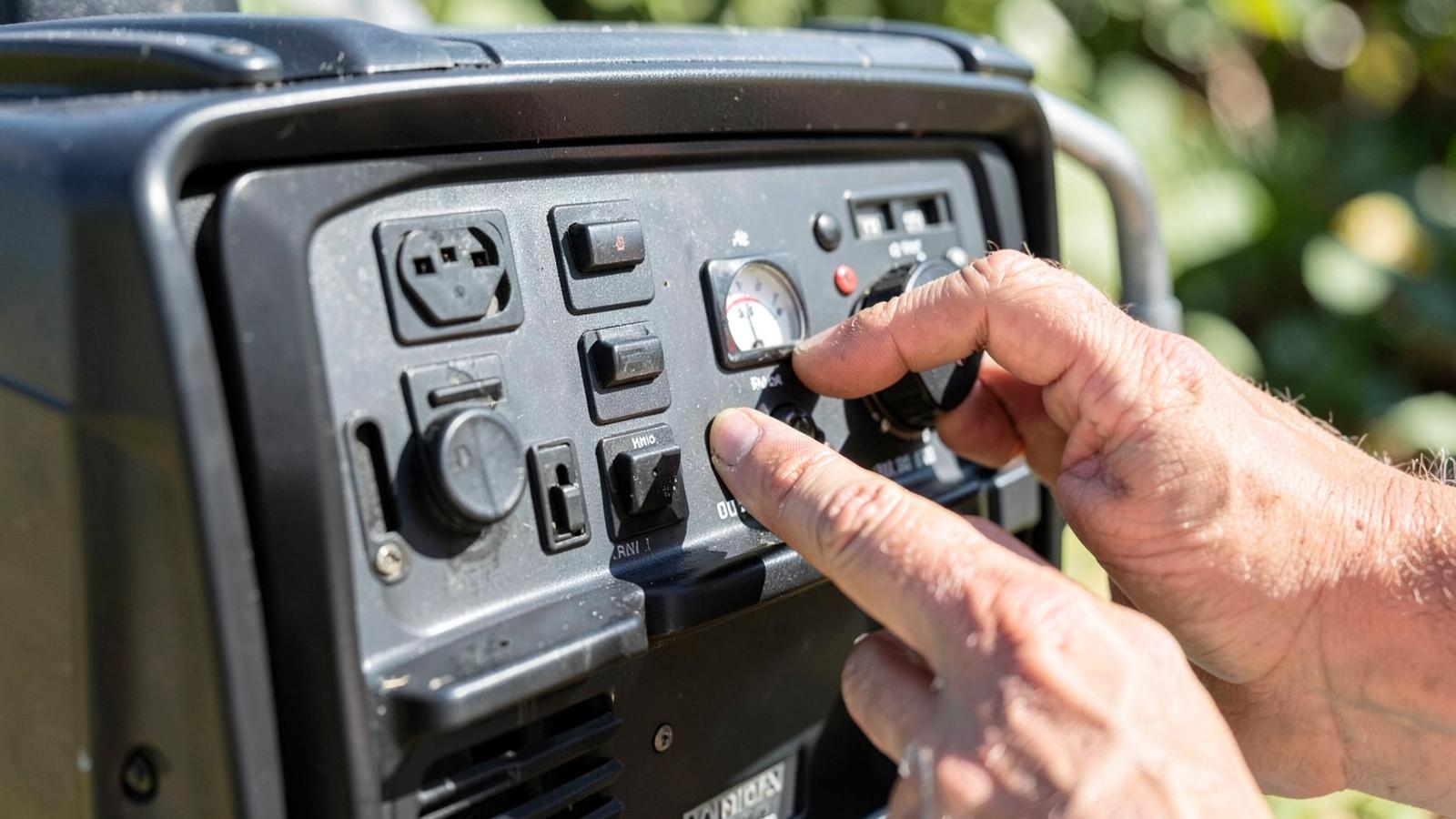
Sizing a generator correctly means adding up the running watts of what you plan to use at the same time, then accounting for the highest starting-watt surge among your appliances — usually the air conditioner compressor. Buying too small a generator means it stalls or trips a breaker when the compressor kicks in; buying much larger than needed adds unnecessary weight, cost, and fuel consumption.
This guide walks through the wattage math step by step, using published appliance figures rather than rough estimates, and works through two common RV air conditioner sizes so you can see exactly how the numbers add up before you buy.
Running watts vs. starting watts
Running watts is the continuous power an appliance draws once it is operating steadily. Starting watts (sometimes called surge watts) is a brief spike — often lasting a fraction of a second to a few seconds — that occurs when a motor first starts, and it can be two to three times the running figure for compressor-driven appliances like air conditioners and refrigerators.
A generator's rated capacity needs to cover the sum of running watts for everything operating simultaneously, plus the single largest starting-watt spike layered on top of that running total — not the sum of every appliance's starting watts at once, since motors rarely all start in the same instant.
Typical RV appliance loads
Common running-watt figures published by appliance manufacturers include roughly 600-1,200W for a residential-style RV refrigerator's compressor cycle, 600-1,000W for a microwave, and 40-100W for device chargers and LED lighting combined. A rooftop air conditioner is typically the single largest load in the RV, both in running watts and in its starting-watt surge.
Always check the data plate or owner's manual for your specific appliances rather than relying on generic figures, since wattage varies by model and manufacturer.
Worked example: 13,500 BTU air conditioner
A 13,500 BTU rooftop RV air conditioner commonly has published running watts in roughly the 1,300-1,600W range with a starting surge that can reach 2,800-3,500W or more, depending on the specific compressor and whether it has soft-start technology. Add a refrigerator running at roughly 600W and basic lighting/chargers at roughly 100W, and the sustained running total lands around 2,000-2,300W.
The generator needs to comfortably exceed both the running total (roughly 2,000-2,300W in this example) and, momentarily, the starting surge added to whatever else is already running. This is why many owners running a single 13,500 BTU unit choose a generator in the 3,000-3,500 running-watt class, or add soft-start technology to reduce the compressor surge.
Worked example: 15,000 BTU air conditioner
A 15,000 BTU rooftop unit typically draws somewhat more running power than a 13,500 BTU unit — commonly in the 1,500-1,800W range — with a comparable or slightly higher starting surge. Adding the same refrigerator and lighting loads pushes the sustained running total to roughly 2,200-2,600W.
For this size of air conditioner, many owners choose a generator in the 3,500-4,500 running-watt class, or install a soft-start device on the compressor to reduce the surge enough that a smaller generator, or two parallel-connected smaller generators, can manage it.
Soft-start devices
A soft-start device installed on the air conditioner's compressor reduces the starting-watt surge substantially by ramping the compressor up gradually rather than switching it on at full draw instantly. This can allow a smaller generator, or a parallel pair of compact generators, to run an air conditioner that would otherwise require a larger single unit.
Soft-start devices are sold as an add-on installation and are separate from the generator itself; check compatibility with your specific air conditioner model before purchasing one.
Keep reading
Frequently asked questions
Final verdict
Sizing an RV generator correctly means adding your simultaneous running-watt total to the single largest starting-watt surge you expect, which for most single-AC RVs points to a generator in the 3,000-4,500 running-watt class unless a soft-start device is installed. Skipping this math is the most common reason owners end up returning a generator that stalls the moment the air conditioner compressor kicks in.
Editorial Team
TopPremiumPicks Editorial Team
The TopPremiumPicks Editorial Team researches and compares premium products across multiple categories using manufacturer specifications, professional reviews and customer feedback. Our guides are research-based and do not represent hands-on product testing.