
This is the first fork in the road. Everything else — price, mowing pattern, how the lawn looks after a month — follows from whether your mower is guided by a buried cable or by satellites.
Neither approach is simply better. They fail in different conditions, and your tree cover usually settles the argument.
Setup effort
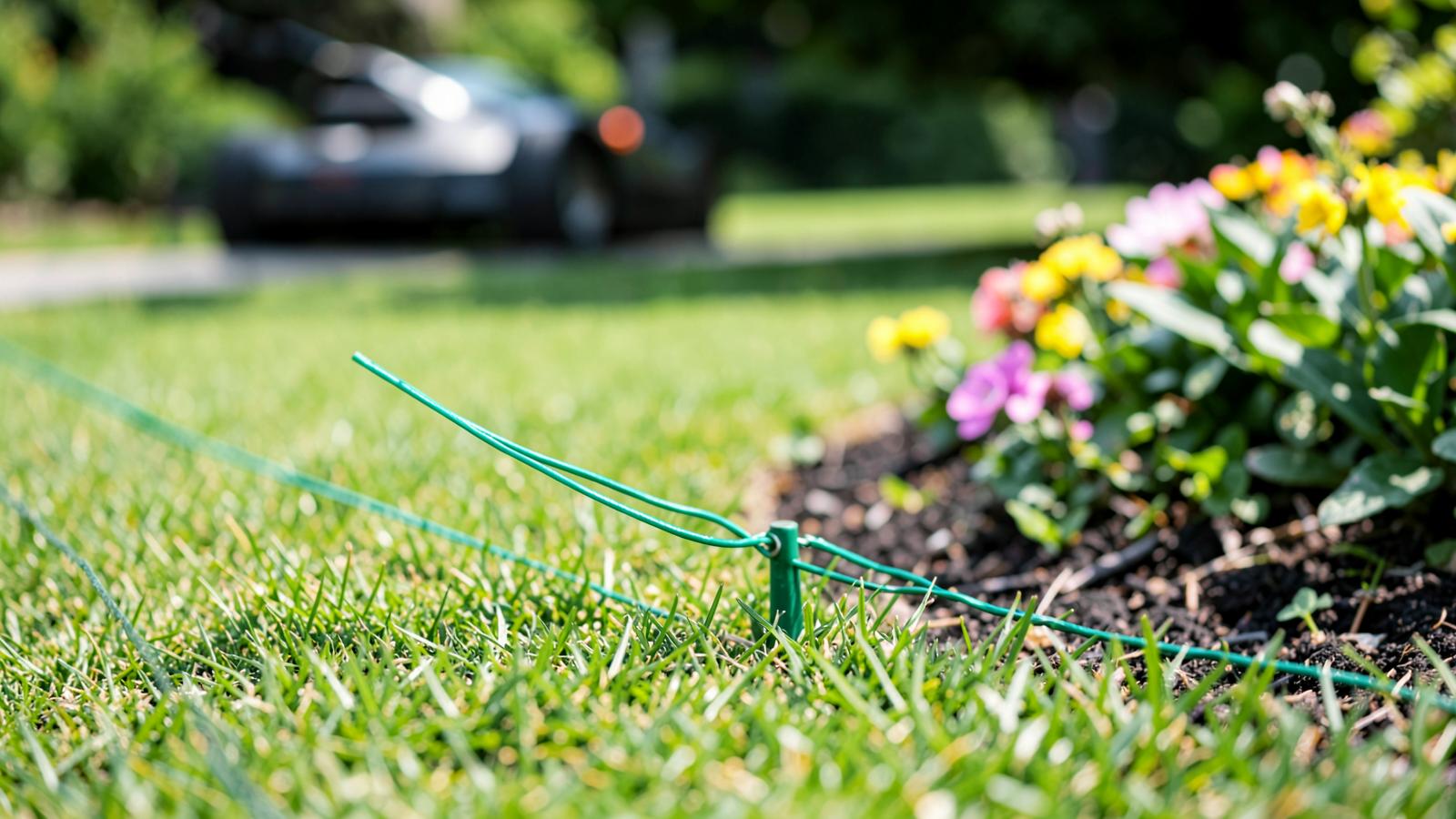
Boundary wire is an afternoon of work: plan the route, peg the cable around the perimeter and any islands, connect it to the dock, and test. Buried installations take longer still.
Wire-free setup is a walk around the lawn holding a phone, plus mounting the reference antenna somewhere with a clear sky view. Most owners are mowing the same day.
Reliability in shade and tight spaces
Wire guidance does not care about trees, walls, weather or time of day. This is the reason Husqvarna's wired platform remains the default recommendation for wooded properties.
Satellite guidance needs sky. Dense canopy, narrow side passages and tall surrounding buildings all degrade it, and the mower will pause or drift. Camera assistance helps but does not eliminate the problem.
Mowing patterns and finish
Wire-guided mowers traditionally mow in random patterns, covering the lawn statistically over many sessions. It works, but it is not efficient and it leaves no stripes.
Wire-free mowers know exactly where they are, so they mow in systematic parallel lines. Coverage is faster and more even, which matters most on large lawns.
What goes wrong later
Wire breaks are the classic wired-mower fault: a spade, an aerator or a rodent cuts the loop and the mower refuses to work until you find and splice the break.
Wire-free faults are digital instead: antenna moved, signal blocked by new growth, map needing adjustment after landscaping. Nothing to dig up, but more dependence on the app and the manufacturer's servers.
Cost over time
Wired mowers are cheaper to buy and carry the installation cost in your own time. Wire-free mowers cost more up front and less in effort.
Over five years the difference narrows: both need blades, both eventually need a battery, and neither has meaningful energy cost.
Keep reading
Frequently asked questions
Final verdict
Choose boundary wire if your lawn is shaded, enclosed or awkwardly shaped and you do not mind an afternoon of installation. Choose wire-free if your lawn has an open sky view and you want systematic mowing and a setup measured in minutes. Camera-assisted wire-free models are the compromise for gardens that are partly shaded.
Editorial Team
TopPremiumPicks Editorial Team
The TopPremiumPicks Editorial Team researches and compares premium products across multiple categories using manufacturer specifications, professional reviews and customer feedback. Our guides are research-based and do not represent hands-on product testing.