
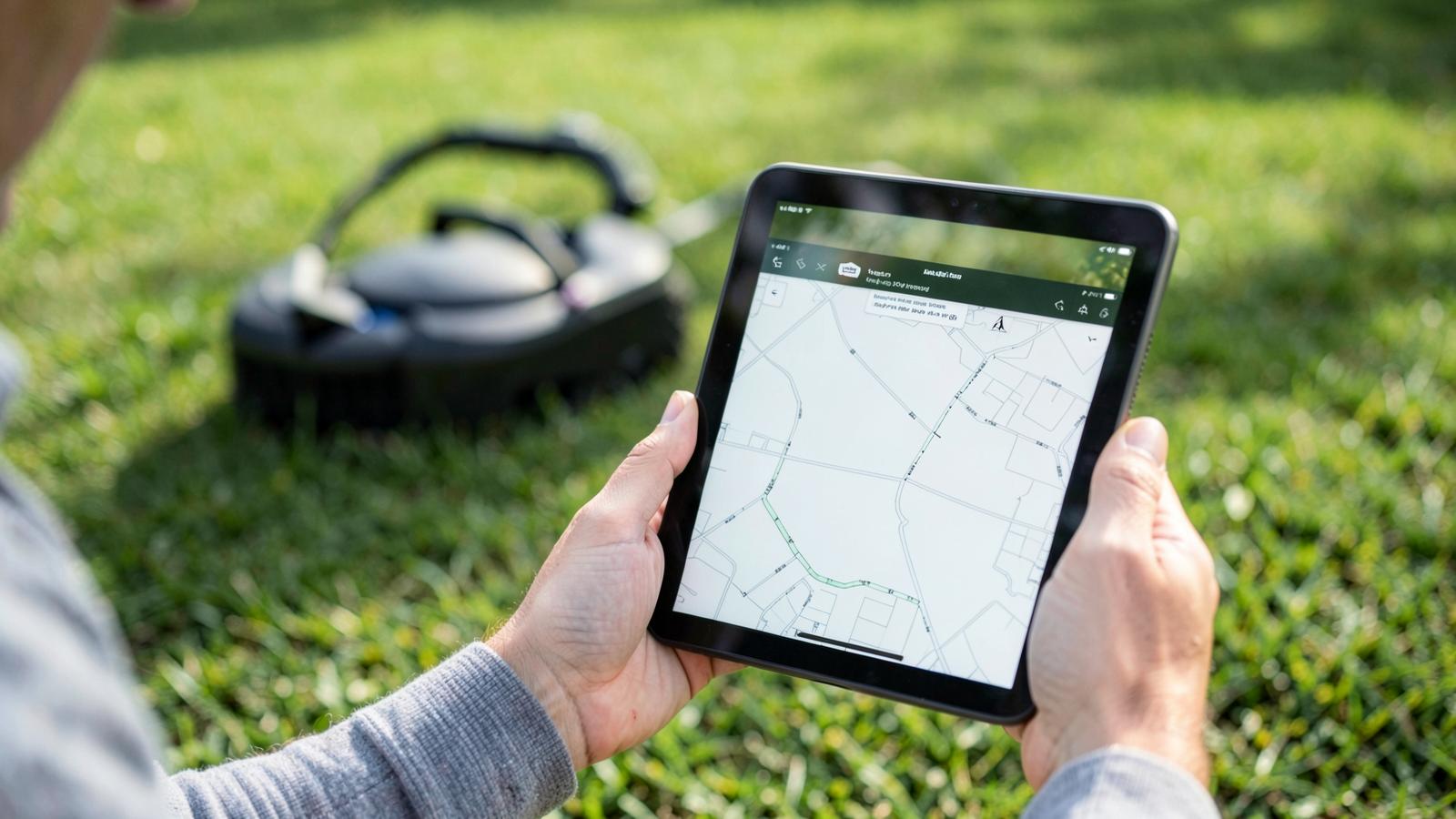
Robot mowers look interchangeable in photographs and behave very differently in a garden. Four things decide the outcome: how the mower knows where it is, how much lawn it is rated for, how steep your ground is, and what is lying on the grass.
This guide explains each in the order that matters, using manufacturer specifications and documented owner experience rather than in-house testing.
Step two: measure the mowable area
Measure the grass, not the property. Subtract beds, paths, drives and buildings, then compare the result with each model's rated coverage.
Buy with headroom. A mower running at its rated limit has no slack for a wet fortnight of fast growth, and the lawn will show it.
Step three: check the steepest part of the lawn
Slope ratings are published as percentages or degrees; 100% equals 45 degrees, so a 45% rating is about 24 degrees. Convert before comparing brands.
Measure the steepest section rather than an average, and remember that published figures assume dry, healthy turf. All-wheel drive is what keeps a mower working when the grass is damp.
Step four: think about what is on the lawn
Bump sensors are universal. Camera-based recognition, which avoids obstacles before contact, is not, and it is the feature worth paying for if toys, hoses, furniture or pets are regularly out.
Fixed obstacles such as trees and ponds are handled by exclusion zones in the app or by wiring an island, so they are a setup question rather than a sensor one.
Step five: plan the installation
Every mower needs a dock with power, ideally sheltered, level and reasonably central. Wire-free models also need the reference antenna somewhere with an open sky view, often a roof edge or a supplied pole.
Wired models need the cable route planned around beds and islands, with enough pegs for the whole perimeter. Budget an afternoon and a sore back.
Step six: budget for consumables
Blades wear and are replaced on a schedule the manufacturer publishes; they are cheap. Batteries eventually decline and are the main long-term cost, so check that replacements are sold for the model you choose.
Winter storage matters too. Most manufacturers specify charging the battery, cleaning the chassis and storing the mower indoors when the season ends.
Safety features to confirm
Look for lift and tilt sensors that stop the blades, a physical stop button, and PIN or app locking so a stolen mower is useless. Several models add GPS tracking alerts.
Manufacturers uniformly advise keeping children and pets off the lawn while a mower is running, whatever sensors it has.
Keep reading
Frequently asked questions
Final verdict
Work in order: pick a navigation system that suits your tree cover, measure the real mowable area and leave headroom, check the steepest slope in the correct units, then decide how much obstacle intelligence your lawn actually needs. Get those four right and almost any current model from an established manufacturer will keep the lawn in good condition.
Editorial Team
TopPremiumPicks Editorial Team
The TopPremiumPicks Editorial Team researches and compares premium products across multiple categories using manufacturer specifications, professional reviews and customer feedback. Our guides are research-based and do not represent hands-on product testing.