
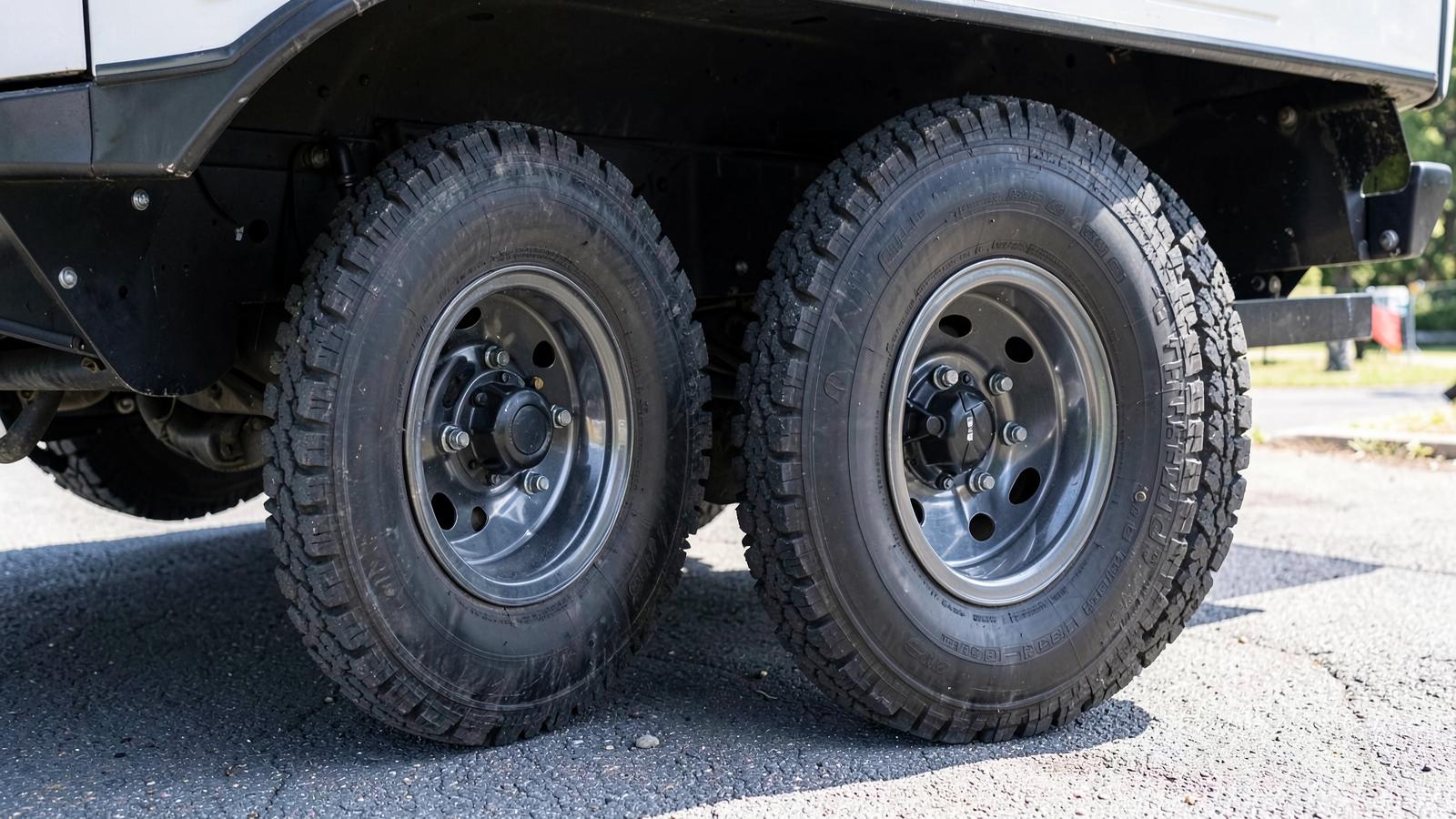
Tire failure is one of the more common roadside emergencies for towable RVs, and it's also one of the most preventable. A tire pressure monitoring system (TPMS) watches every tire in real time and alerts the driver to slow leaks or rising temperature well before a blowout, which matters more on a trailer than a car because you often can't feel a soft trailer tire from the driver's seat.
Most aftermarket RV TPMS kits fall into two categories: cap-mounted sensors that thread onto the existing valve stem, and internal sensors that mount inside the tire on the wheel band. Cap sensors are far easier to install and are the more common choice; internal sensors are more resistant to theft and impact but require a tire shop to fit.
This guide focuses specifically on multi-axle towable and motorhome setups, where sensor count, monitor range, and signal repeating matter more than they do on a typical passenger vehicle.
The quick answer
- Best OverallTST 507 Series RV Tire Pressure Monitoring System — Reliable cap sensors with a configurable color display and optional repeater.
- Best Built-In RepeaterTireMinder i10 Tire Pressure Monitoring System with 10 Transmitters — Signal repeating built into the base kit for long combinations.
- Best Value with RepeaterTymate M7-3 RV Tire Pressure Monitoring System — Mid-range kit that includes a signal repeater and solar-charging monitor.
Our top picks
Researched and compared by our editors. Prices move constantly, so check the retailer for today's price.
Affiliate disclosure — As an Amazon Associate I earn from qualifying purchases. TopPremiumPicks may also earn commissions from other retailers. This costs you nothing extra and does not influence our recommendations.
Best Overall
TST
TST 507 Series RV Tire Pressure Monitoring System
Best for: Towable RVs and fifth wheels with multiple axles
Key feature: Cap-style sensors that thread onto the valve stem, requiring no internal tire work
A cap-mounted tire pressure monitoring system widely used on RVs and trailers, pairing external sensors with a color monitor that displays pressure and temperature per tire.
Upper Mid-Range ($$$)Best Built-In Repeater
TireMinder
TireMinder i10 Tire Pressure Monitoring System with 10 Transmitters
Best for: Motorhomes towing a second vehicle
Key feature: Cap-style sensors compatible with standard and high-pressure tires
A cap-mounted TPMS with a 3.15-inch color display capable of monitoring up to 20 tires across up to four vehicles, with wireless signal repeating built into the monitor for longer trailer and towed-vehicle combinations.
Upper Mid-Range ($$$)Best Value with Repeater
Tymate
Tymate M7-3 RV Tire Pressure Monitoring System
Best for: Budget-conscious owners wanting a full-featured TPMS
Key feature: Cap-mounted external sensors that install without breaking the tire bead
A cap-sensor tire pressure monitoring system with a color monitor and solar-assisted charging, offering configurable alarms and an included repeater on RV-oriented kits for longer trailer combinations.
Mid-Range ($$)| Product | Our pick | Best for | Price tier | Key feature | Check price |
|---|---|---|---|---|---|
TST TST 507 Series RV Tire Pressure Monitoring System | Best Overall | Towable RVs and fifth wheels with multiple axles | Upper Mid-Range ($$$) | Cap-style sensors that thread onto the valve stem, requiring no internal tire work | |
TireMinder TireMinder i10 Tire Pressure Monitoring System with 10 Transmitters | Best Built-In Repeater | Motorhomes towing a second vehicle | Upper Mid-Range ($$$) | Cap-style sensors compatible with standard and high-pressure tires | |
Tymate Tymate M7-3 RV Tire Pressure Monitoring System | Best Value with Repeater | Budget-conscious owners wanting a full-featured TPMS | Mid-Range ($$) | Cap-mounted external sensors that install without breaking the tire bead |
Price tiers $ Budget · $$ Mid-range · $$$ Upper mid-range · $$$$ Premium · $$$$$ Flagship. We show tiers rather than prices — check Amazon for the current price.
The picks in detail
Best Overall
TST
TST 507 Series RV Tire Pressure Monitoring System
A cap-mounted tire pressure monitoring system widely used on RVs and trailers, pairing external sensors with a color monitor that displays pressure and temperature per tire.
Why it stands out
Cap-mounted sensors install in minutes without breaking the tire bead or removing the wheel.
Best for
Towable RVs and fifth wheels with multiple axles
Not ideal for
Owners who prefer sensors hidden inside the wheel for theft resistance
Key features
- ◆Cap-style sensors that thread onto the valve stem, requiring no internal tire work
- ◆Color monitor displaying real-time pressure and temperature for each sensor
- ◆Configurable high and low pressure alerts per tire position
- ◆Kits scalable from a single axle up to multi-axle towables
- ◆Optional signal booster/repeater for longer trailer combinations
Pros
- Fast, tool-free installation
- Configurable alert thresholds per tire
- Well suited to multi-axle towable setups
Considerations
- External sensors can be more vulnerable to curb strikes
- Booster is a separate purchase for long combinations
Final verdict
TST 507 Series RV Tire Pressure Monitoring System suits buyers who prioritise towable rvs and fifth wheels with multiple axles. Worth knowing: External sensors are more exposed to impact and theft than internal sensors.
Best Built-In Repeater
TireMinder
TireMinder i10 Tire Pressure Monitoring System with 10 Transmitters
A cap-mounted TPMS with a 3.15-inch color display capable of monitoring up to 20 tires across up to four vehicles, with wireless signal repeating built into the monitor for longer trailer and towed-vehicle combinations.
Why it stands out
Signal repeating is built into the base kit rather than sold as a separate accessory, simplifying setup for long combinations.
Best for
Motorhomes towing a second vehicle
Not ideal for
Buyers who specifically want internal, tire-mounted sensors
Key features
- ◆Cap-style sensors compatible with standard and high-pressure tires
- ◆Built-in signal repeating function to extend range on long combinations
- ◆Color display showing pressure and temperature for each sensor
- ◆Configurable for towing a second vehicle alongside the RV
- ◆Audible and visual alerts for pressure loss or high temperature
Pros
- Built-in repeating range extension
- Straightforward setup across tow vehicle and trailer
- Clear color display
Considerations
- External sensors slightly increase valve stem stress over time
- Monitor menu takes some learning for multi-vehicle setups
Final verdict
TireMinder i10 Tire Pressure Monitoring System with 10 Transmitters suits buyers who prioritise motorhomes towing a second vehicle. Worth knowing: As with any cap-mounted sensor, the units remain exposed on the outside of the valve stem.
Best Value with Repeater
Tymate
Tymate M7-3 RV Tire Pressure Monitoring System
A cap-sensor tire pressure monitoring system with a color monitor and solar-assisted charging, offering configurable alarms and an included repeater on RV-oriented kits for longer trailer combinations.
Why it stands out
It bundles features typically sold separately — solar monitor charging and a signal repeater — into a mid-range kit.
Best for
Budget-conscious owners wanting a full-featured TPMS
Not ideal for
Owners who prefer sensors hidden inside the wheel for theft resistance
Key features
- ◆Cap-mounted external sensors that install without breaking the tire bead
- ◆Color monitor with solar-assisted charging and individual tire readouts
- ◆Configurable high/low pressure, temperature, and rapid-leak alarms
- ◆Signal repeater included on RV-oriented kits for longer combinations
- ◆Expandable sensor count for multi-axle towables
Pros
- Included repeater extends range on long combinations
- Solar charging reduces monitor cable clutter
- Straightforward installation and pairing
Considerations
- External sensors can be more vulnerable to curb strikes
- Solar charging depends on adequate sunlight exposure
Final verdict
Tymate M7-3 RV Tire Pressure Monitoring System suits buyers who prioritise budget-conscious owners wanting a full-featured tpms. Worth knowing: External cap sensors remain exposed to impact and theft, as with any cap-mounted system.
Cap-mounted vs. internal sensors
Cap-mounted sensors thread onto the valve stem in place of the standard dust cap, so installation takes minutes per tire and needs no tools beyond a wrench. This is why the majority of RV TPMS kits sold are cap-based. The trade-off is that the sensor sits outside the wheel, exposed to curb strikes, road debris and, less commonly, theft.
Internal sensors mount inside the tire on the wheel band, which means a tire shop needs to break the bead to fit or relocate them. In exchange, the sensor is fully protected from the elements and impact, and it's not visible or removable from outside the wheel. Full-time RVers and owners who park in less secure locations tend to prefer internal sensors for this reason.
Signal repeaters and range
On a long fifth wheel, a triple-axle trailer, or a motorhome towing a car, the sensors on the rearmost tires can be far enough from the monitor (typically mounted on the dash) that signal strength weakens. Some systems, like TireMinder's i10, build a repeating function into the base kit; others, like TST's 507 series, offer a signal booster as a separate accessory, while value-oriented kits like Tymate's M7-3 include a repeater in the box.
If you're monitoring more than two axles or towing a second vehicle behind your RV, factor a repeater into your budget from the start rather than discovering a range problem after installation.
Sensor count for towables
A basic dual-axle travel trailer needs four sensors for the trailer tires; add sensors for the tow vehicle's tires if you want full-vehicle coverage, and more again for a spare. Triple-axle fifth wheels and larger motorhomes towing a car can need eight, ten, or more sensors in total.
Check the maximum sensor count supported by a given monitor before buying — some budget monitors cap out at a lower number of sensors than a large multi-axle setup requires, which forces an upgrade to a higher kit tier.
Battery life and maintenance
Cap-mounted sensor batteries are generally user-replaceable and commonly rated for roughly a year or more of typical use, though manufacturers vary in exact figures and seasonal storage extends battery life considerably. Internal sensors typically have sealed, non-replaceable batteries with a longer rated lifespan, since replacing them requires removing the tire anyway.
Regardless of sensor type, check the monitor's low-battery warning behavior before a long trip, and keep spare batteries or a spare sensor on hand for cap-mounted systems if you travel frequently.
Setting alert thresholds
Most systems let you set custom high- and low-pressure thresholds per tire position, along with a high-temperature alert. Set these based on your tire manufacturer's recommended cold pressure, not a generic default, since correct pressure varies by tire size and load.
A monitor that clearly identifies which tire triggered an alert — front left, rear axle two, and so on — is significantly more useful in practice than one that just gives a generic warning, especially on multi-axle rigs where pulling over to check every tire wastes time.
Keep reading
Frequently asked questions
Final verdict
For most towable RV owners, a cap-mounted system like the TST 507 series covers the essentials — easy installation, configurable alerts, and expandability for multiple axles. Owners running long combinations should prioritize a system with a built-in or add-on repeater, like the TireMinder i10 with 10 transmitters. Buyers on a tighter budget can look to kits like Tymate's M7-3, which bundle a repeater and solar-charging monitor at a mid-range price. A TPMS is inexpensive relative to the cost of a blown tire and the potential trailer damage that follows.
Editorial Team
TopPremiumPicks Editorial Team
The TopPremiumPicks Editorial Team researches and compares premium products across multiple categories using manufacturer specifications, professional reviews and customer feedback. Our guides are research-based and do not represent hands-on product testing.