
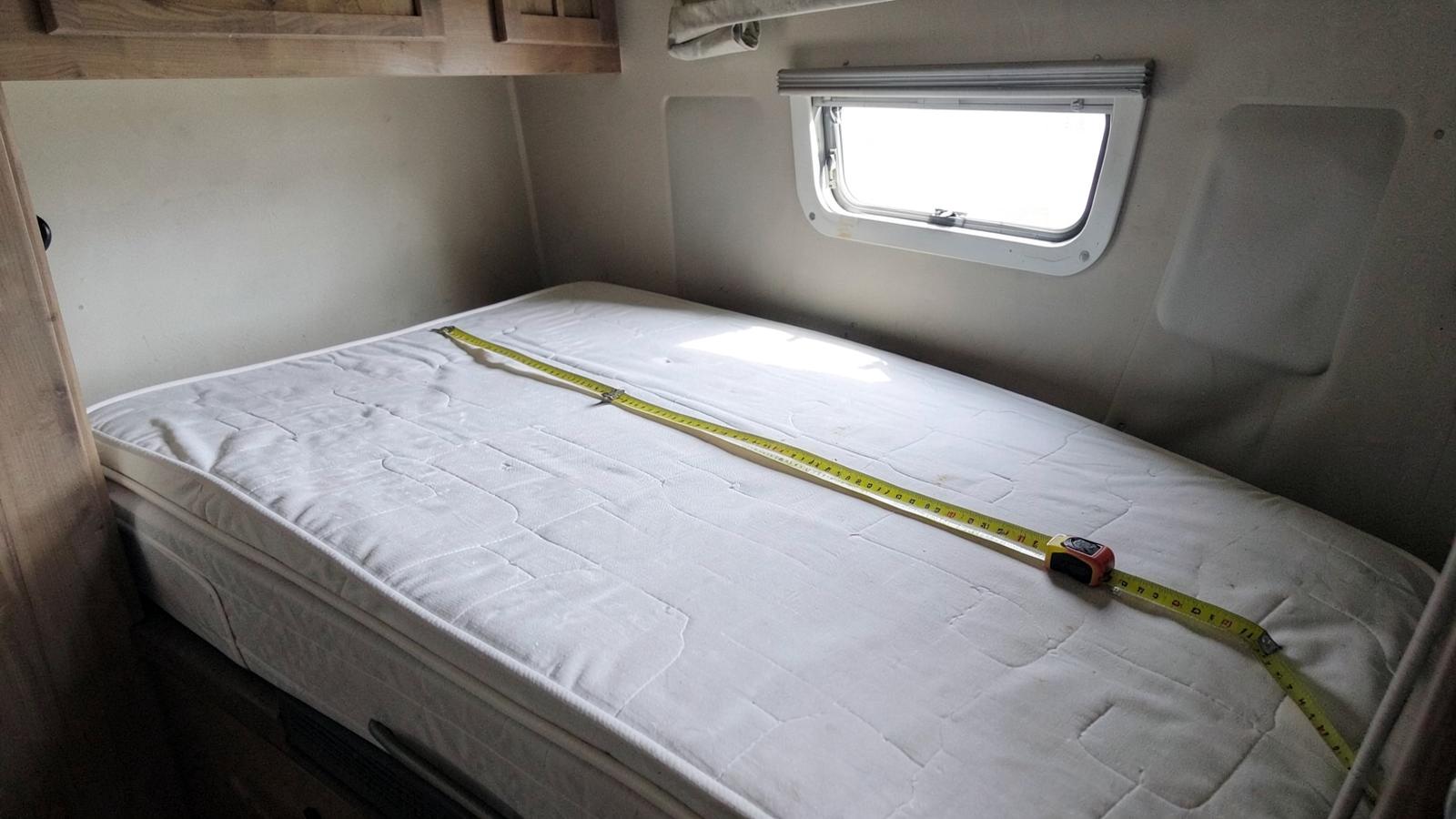
The single most common mistake in buying an RV mattress replacement is assuming a standard home mattress size will fit. RV manufacturers use a handful of sizes — short queen, RV king, RV bunk and RV twin among them — that are cut narrower or shorter than their household namesakes to fit around wheel wells, slide-out mechanisms, and tighter bedroom walls.
Getting the size wrong means either a gap at the end of the bed that lets bedding slide and cold air in, or a mattress that has to be forced or trimmed to fit a frame it wasn't built for. Measuring your existing mattress or frame directly, rather than assuming based on your RV's general size class, is the only reliable way to get this right the first time.
This guide covers how RV sizes differ from home sizes, how to measure correctly, thickness limits tied to bed lids and storage access, why corner cuts matter, and when it makes more sense to replace a mattress outright versus adding a topper.
RV short queen, RV king and bunk sizing explained
RV short queen is the most common size in travel trailers and fifth wheels, and it's shorter — sometimes by 4 to 5 inches — than a standard home queen mattress, generally to clear a bedroom wall or wheel well at the foot of the bed. RV king is used in some larger fifth wheels and motorhomes and can also differ from a standard king in length or width depending on the coach manufacturer.
RV bunk and RV twin sizes are used in bunkhouse trailers and cab-over camper bunks, and these tend to vary more between manufacturers than short queen or RV king, since bunk frame dimensions aren't standardized the way bedroom platforms often are. This is exactly why measuring your specific frame matters more for bunk replacements than any other category.
How to measure your bed frame correctly
Measure the actual sleeping platform, not the existing mattress, since a worn or compressed mattress can measure slightly differently than the frame itself. Measure length and width at multiple points if the platform has any angled corners or an irregular shape, which is common in RV bedrooms built around wheel wells or closets.
If you still have the original mattress and it fit properly, measuring it directly is a reliable shortcut, but note any obvious corner cuts, which are a detail some replacement mattress listings don't clearly specify and are worth confirming with the seller before ordering.
Thickness limits and bed lid clearance
Many RV bed platforms are built as a lid over a storage compartment, and the gap between the top of the lid frame and any overhead cabinetry sets a practical maximum mattress thickness. Going thicker than that clearance can make the lid difficult to lift for storage access, or in some cases make the mattress interfere with overhead cabinets entirely.
Measure the clearance above your current mattress with the lid fully closed before choosing a replacement thickness, especially if you're considering a hybrid mattress, which is typically thicker than a comparable all-foam design due to the added coil layer.
Corner cuts and irregular shapes
Some RV bed platforms, particularly those built around a slide-out or a walkway at the foot of the bed, have one or both foot corners cut at an angle rather than square. A standard rectangular mattress will either overhang the platform at that cut corner or need to be tucked awkwardly against the wall.
Not every RV-specific mattress size accounts for corner cuts by default — check the specific listing or contact the manufacturer to confirm whether a cut-corner option exists for your exact platform shape before ordering a standard rectangular replacement.
Replacing vs. adding a topper
If your existing mattress fits the frame correctly and the main complaint is firmness rather than sagging or physical damage, a mattress topper cut to the same RV size can be a lower-cost way to improve comfort without replacing the whole mattress. This works best when the underlying mattress is still structurally sound.
A full replacement makes more sense when the existing mattress is sagging, has visible damage, or when you're changing sizes — for example, moving from an all-foam to a hybrid construction — since a topper can't correct problems with the base mattress's support layer.
A quick sizing checklist before you buy
Before ordering, confirm four things: the exact length and width of your sleeping platform, whether either foot corner is cut at an angle, the maximum thickness your bed lid or overhead clearance allows, and whether you want an all-foam or hybrid feel. Getting these four details right up front avoids the most common return-and-reorder headaches with RV mattress purchases.
See our best RV mattresses guide for specific products compared across short queen, RV king and bunk sizing once you've confirmed the dimensions your bed platform actually needs.
Keep reading
Frequently asked questions
Final verdict
RV mattress sizing comes down to measuring your actual sleeping platform rather than assuming a standard home size will work, and checking for angled corner cuts and bed lid clearance before ordering. Short queen is the most common size for travel trailers and fifth wheels, RV king varies more by coach manufacturer, and bunk or twin sizes need the most careful individual measurement of all. Confirm these details first, then compare specific mattresses on construction and thickness.
Editorial Team
TopPremiumPicks Editorial Team
The TopPremiumPicks Editorial Team researches and compares premium products across multiple categories using manufacturer specifications, professional reviews and customer feedback. Our guides are research-based and do not represent hands-on product testing.