
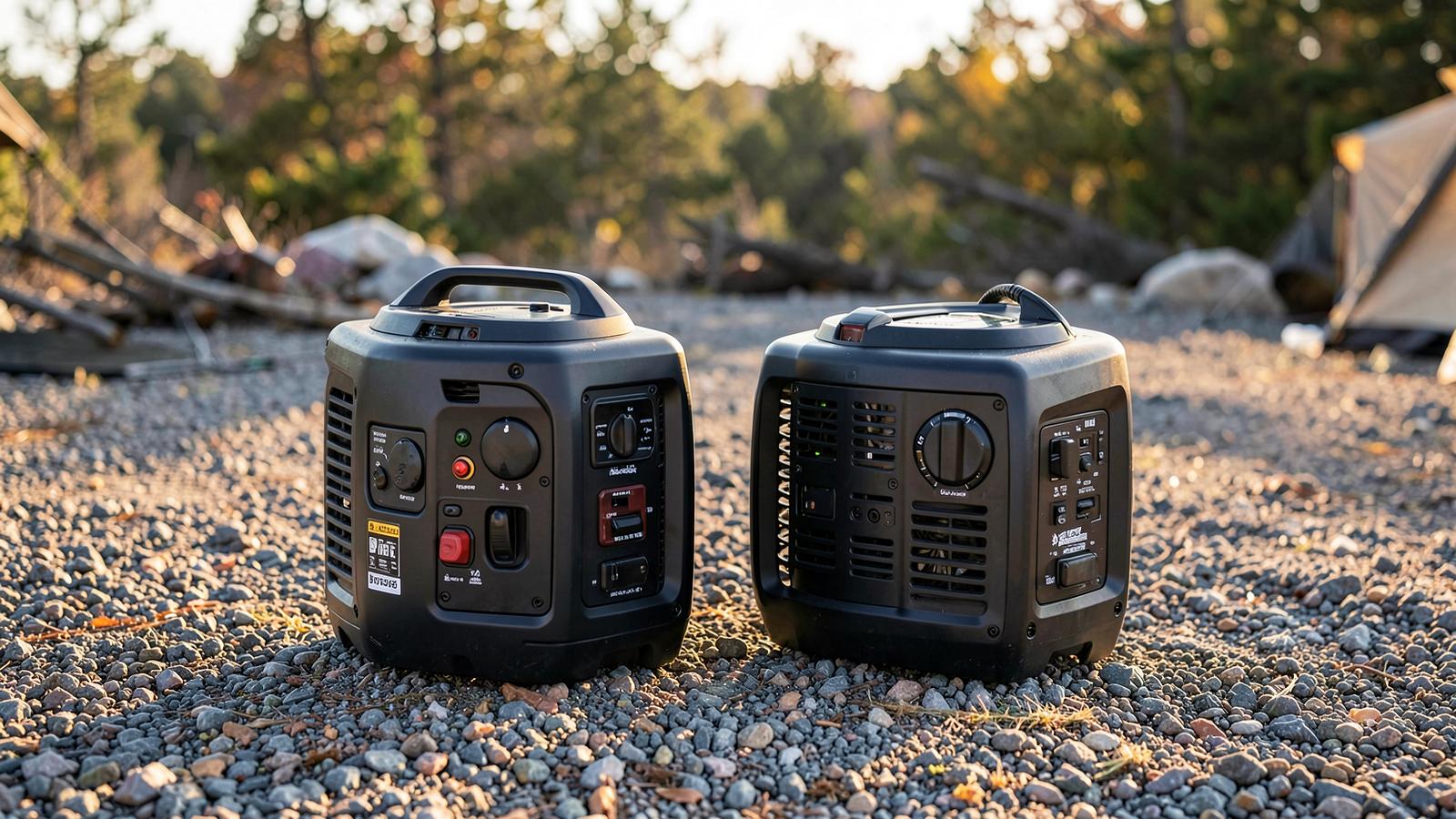
On paper these two are the same generator. Both are rated at 2,200 starting watts and 1,800 running watts, both are compact gasoline inverter units, both publish noise ratings in the high forties to high fifties dBA depending on load, and both are parallel-capable with a companion unit.
When the specifications converge this closely, the decision moves to the things spec sheets do not cover: how each brand's throttle system behaves, what happens when you need a part in three years, and which unit you can actually get at a sensible price where you live. This comparison is research-based, using both manufacturers' published figures.
The two products compared
Product details come from our central product records. Prices change constantly, so check the retailer for the current price.
Affiliate disclosure — As an Amazon Associate I earn from qualifying purchases. TopPremiumPicks may also earn commissions from other retailers. This costs you nothing extra and does not influence our recommendations.
Product A
Honda
Honda EU2200i
Premium ($$$$)
Best for: buyers who want the broadest service and parts network
A compact inverter generator widely used as a reference point for reliability and noise control in the RV and camping market. Manufacturer specifications list a 2,200-watt starting output and 1,800-watt running output.
Product B
Yamaha
Yamaha EF2200iS
Premium ($$$$)
Best for: buyers who find better availability or pricing on the Yamaha
A compact inverter generator positioned as a direct alternative to similarly sized Honda models, with manufacturer specifications citing comparable output and low-noise operation.
Comparison at a glance
| Category | Honda EU2200i | Yamaha EF2200iS | Edge |
|---|---|---|---|
| Starting watts | 2,200W | 2,200W | Tie |
| Running watts | 1,800W | 1,800W | Tie |
| Noise (manufacturer) | 48-57 dBA (manufacturer rating, varies by load) | 47-57 dBA (manufacturer rating, varies by load) | Effectively comparable |
| Fuel | Gasoline | Gasoline | Tie |
| Parallel capable | Yes (with compatible companion unit) | Yes | Tie |
| Price tier | Premium | Premium | Tie |
| Service network | Extensive power-equipment dealer network | Established, though thinner in some regions | Honda |
| Check price | Check Price on Amazon | Check Price on Amazon |
Output: genuinely identical
Both units publish 2,200 starting watts and 1,800 running watts. Neither will start a typical rooftop RV air conditioner alone, and both will comfortably run lighting, a water pump, chargers, a fan and an absorption refrigerator's electronics with headroom left.
If your load calculation lands above 1,800 running watts, this comparison is the wrong one — you need a larger unit or a parallel pair, and that decision comes before the brand choice.
Noise and throttle behaviour
Honda's Eco-Throttle and Yamaha's Smart Throttle do the same job: drop engine speed when load falls. Published ratings sit within a decibel or two of each other, and that difference is not audible in a campground with any ambient noise at all.
What owners do report differently is character rather than volume — the two engines sound different under load. That is a preference, not a specification.
Service network and parts
This is the clearest separation. Honda's power-equipment dealer network is unusually broad, which matters in year five when you need a carburettor kit or warranty service somewhere unfamiliar. Yamaha's network is established but generally thinner for portable power equipment, and availability varies more by region.
If you travel widely and intend to keep the generator a long time, weight this factor heavily. If you have a good Yamaha dealer nearby, it largely evaporates.
Which should you buy?
Buy the Honda if you want the safest long-term support position and the widest parts availability, or if resale matters to you — Honda's name carries weight in the used market.
Buy the Yamaha if it is better priced or more readily available where you shop, or if you already own Yamaha equipment and have a dealer relationship. Functionally you are not giving anything up.
Keep reading
Frequently asked questions
Final verdict
There is no wrong answer here. Honda edges it on service network and resale reputation; Yamaha matches it on every specification that affects how you camp. Buy whichever is better available and better priced for you — and if both are equal, take the Honda for the support network.
Best for buyers who want the broadest service and parts network
Honda EU2200i
Manufacturer-rated noise level that is low relative to output, useful in quiet campgrounds.
Best for buyers who find better availability or pricing on the Yamaha
Yamaha EF2200iS
Comparable output and noise profile to leading compact competitors, per published specifications.
Editorial Team
TopPremiumPicks Editorial Team
The TopPremiumPicks Editorial Team researches and compares premium products across multiple categories using manufacturer specifications, professional reviews and customer feedback. Our guides are research-based and do not represent hands-on product testing.