
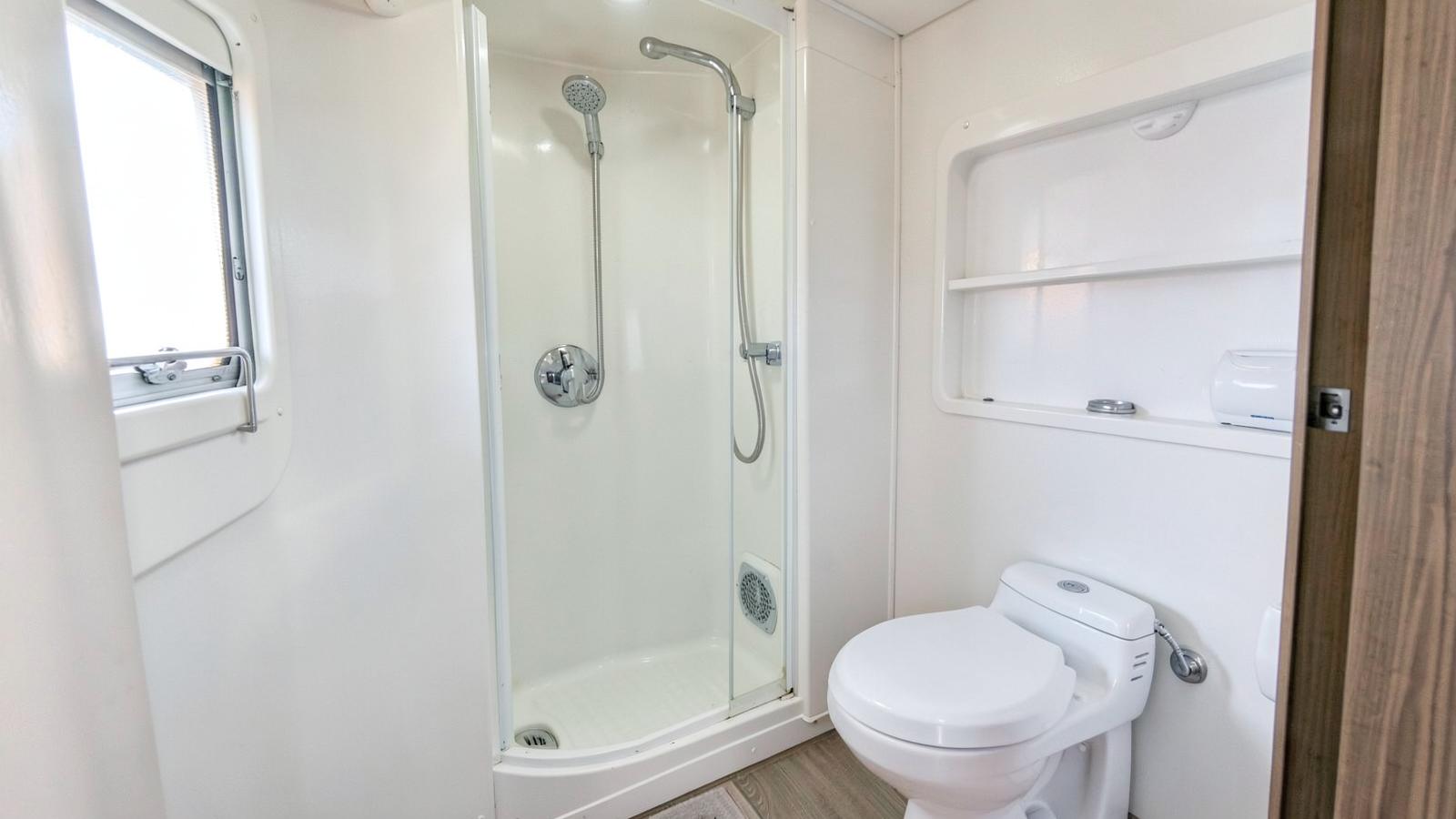
Installed RV toilets fall into three broad categories: gravity-flush units that rely on a direct drop into a black tank positioned below, macerating systems that grind waste and pump it through a narrow hose to a remotely located tank, and composting toilets that eliminate the black tank and its plumbing entirely.
Which category makes sense depends heavily on your RV's existing plumbing layout. A factory gravity-flush toilet is straightforward to replace with another gravity model, but switching to a macerating or composting system is a bigger project involving different plumbing, venting, or electrical needs.
This guide walks through the trade-offs among the three flush types and highlights specific installed models within each category, based on manufacturer specifications and documented owner feedback rather than in-house testing.
The quick answer
- Best standard gravity toiletDometic 310 Gravity-Flush RV Toilet — Widely used OEM design with easy-to-find replacement parts.
- Most residential bowl shapeThetford Aria Classic Gravity-Flush RV Toilet — Contoured bowl closer to a household toilet feel.
- Best for remote tank placementDometic MasterFlush 8100 Series Macerating Toilet — Vacuum-assisted macerating flush for flexible plumbing routing.
- Best composting optionNature's Head Self-Contained Composting Toilet — Eliminates black-tank plumbing entirely for off-grid setups.
Our top picks
Researched and compared by our editors. Prices move constantly, so check the retailer for today's price.
Affiliate disclosure — As an Amazon Associate I earn from qualifying purchases. TopPremiumPicks may also earn commissions from other retailers. This costs you nothing extra and does not influence our recommendations.
1
Dometic
Dometic 310 Gravity-Flush RV Toilet
Best for: Standard travel trailers and motorhomes
Key feature: China (ceramic) bowl for scratch resistance
A widely installed gravity-flush ceramic RV toilet with a foot-pedal flush valve, commonly found as factory equipment across many towable and motorized RVs.
Mid-Range ($$)2
Thetford
Thetford Aria Classic Gravity-Flush RV Toilet
Best for: Owners wanting a more residential-feeling bowl shape
Key feature: Contoured bowl shape for residential-style seating
A gravity-flush RV toilet from Thetford with a contoured, residential-style bowl shape and a hand-operated or pedal flush lever depending on configuration.
Mid-Range ($$)3
Dometic
Dometic MasterFlush 8100 Series Macerating Toilet
Best for: Motorhomes with a black tank located away from the toilet
Key feature: Powerful macerator pump for remote tank placement
A macerating, power-flush RV toilet designed for installations where the black tank sits away from a straight gravity drop, common in larger motorhomes.
Premium ($$$$)4
Nature's Head
Nature's Head Self-Contained Composting Toilet
Best for: Van and skoolie conversions
Key feature: Urine-diverting design to reduce odor and speed composting
A self-contained, waterless composting toilet with a urine diverter, widely installed in RVs, vans and boats that want to avoid black-tank plumbing entirely.
Premium ($$$$)| Product | Our pick | Best for | Price tier | Key feature | Check price |
|---|---|---|---|---|---|
Dometic Dometic 310 Gravity-Flush RV Toilet | 1 | Standard travel trailers and motorhomes | Mid-Range ($$) | China (ceramic) bowl for scratch resistance | |
Thetford Thetford Aria Classic Gravity-Flush RV Toilet | 2 | Owners wanting a more residential-feeling bowl shape | Mid-Range ($$) | Contoured bowl shape for residential-style seating | |
Dometic Dometic MasterFlush 8100 Series Macerating Toilet | 3 | Motorhomes with a black tank located away from the toilet | Premium ($$$$) | Powerful macerator pump for remote tank placement | |
Nature's Head Nature's Head Self-Contained Composting Toilet | 4 | Van and skoolie conversions | Premium ($$$$) | Urine-diverting design to reduce odor and speed composting |
Price tiers $ Budget · $$ Mid-range · $$$ Upper mid-range · $$$$ Premium · $$$$$ Flagship. We show tiers rather than prices — check Amazon for the current price.
The picks in detail
1
Dometic
Dometic 310 Gravity-Flush RV Toilet
A widely installed gravity-flush ceramic RV toilet with a foot-pedal flush valve, commonly found as factory equipment across many towable and motorized RVs.
Why it stands out
Widely used as OEM equipment, so replacement parts and seals are easy to find.
Best for
Standard travel trailers and motorhomes
Not ideal for
Rigs needing to route waste horizontally to a remote tank
Key features
- ◆China (ceramic) bowl for scratch resistance
- ◆Foot-pedal operated flush valve
- ◆Standard or high-profile bowl height options
- ◆Compatible with standard RV toilet flanges
- ◆Sealed water valve to reduce odor
Pros
- Reliable, well-known design
- Easy parts availability
- Available in standard and high-profile heights
Considerations
- Not suitable for remote tank placement
- Foot pedal mechanism can wear over years of use
Final verdict
Dometic 310 Gravity-Flush RV Toilet suits buyers who prioritise standard travel trailers and motorhomes. Worth knowing: Gravity-flush toilets need the black tank positioned directly below or very near the toilet.
2
Thetford
Thetford Aria Classic Gravity-Flush RV Toilet
A gravity-flush RV toilet from Thetford with a contoured, residential-style bowl shape and a hand-operated or pedal flush lever depending on configuration.
Why it stands out
Bowl shape and seat design are closer to a household toilet than many RV-specific models.
Best for
Owners wanting a more residential-feeling bowl shape
Not ideal for
Installations requiring waste to travel far from the toilet
Key features
- ◆Contoured bowl shape for residential-style seating
- ◆China (ceramic) bowl surface
- ◆Sealed flush valve to limit odor transfer
- ◆Available in multiple bowl heights
- ◆Compatible with standard RV toilet flanges
Pros
- Comfortable bowl shape
- Ceramic surface resists staining
- Multiple height options
Considerations
- Requires gravity-compatible tank placement
- Flush mechanism varies by configuration
Final verdict
Thetford Aria Classic Gravity-Flush RV Toilet suits buyers who prioritise owners wanting a more residential-feeling bowl shape. Worth knowing: Like other gravity units, it needs the black tank close by.
3
Dometic
Dometic MasterFlush 8100 Series Macerating Toilet
A macerating, power-flush RV toilet designed for installations where the black tank sits away from a straight gravity drop, common in larger motorhomes.
Why it stands out
Vacuum-assisted flush uses relatively little water per flush while still clearing the bowl effectively.
Best for
Motorhomes with a black tank located away from the toilet
Not ideal for
Simple gravity-flush installations where a macerator isn't needed
Key features
- ◆Powerful macerator pump for remote tank placement
- ◆Vacuum-assisted flush with low water use per flush
- ◆Ceramic bowl with residential-style seat
- ◆Compact discharge hose routing
- ◆Multiple bowl orientation options for tight installs
Pros
- Flexible tank placement
- Efficient water use per flush
- Multiple orientation options for tight spaces
Considerations
- Higher cost than gravity units
- Requires the macerator pump to be serviced over time
Final verdict
Dometic MasterFlush 8100 Series Macerating Toilet suits buyers who prioritise motorhomes with a black tank located away from the toilet. Worth knowing: More complex and costly to install and service than a basic gravity toilet.
4
Nature's Head
Nature's Head Self-Contained Composting Toilet
A self-contained, waterless composting toilet with a urine diverter, widely installed in RVs, vans and boats that want to avoid black-tank plumbing entirely.
Why it stands out
Eliminates black-tank plumbing and dump-station visits for solid waste entirely.
Best for
Van and skoolie conversions
Not ideal for
Owners who prefer a familiar flush-toilet experience
Key features
- ◆Urine-diverting design to reduce odor and speed composting
- ◆Hand crank for mixing the solids compartment
- ◆No black-tank plumbing or water connection required
- ◆Separate liquid bottle for more frequent emptying
- ◆Vent hose fitting to route odors outside
Pros
- No black tank required
- Popular in off-grid conversions
- Reduces water usage
Considerations
- Liquid container needs frequent emptying
- Different user routine than a standard flush toilet
Final verdict
Nature's Head Self-Contained Composting Toilet suits buyers who prioritise van and skoolie conversions. Worth knowing: Requires more frequent liquid-bottle emptying and periodic solids-compartment maintenance.
Gravity, macerating or composting?
Gravity-flush toilets are the simplest and most common design: waste drops directly through a floor flange into a black tank positioned immediately below. They're reliable, have few moving parts, and use well-understood replacement seals and flush valves, but the toilet and tank must be vertically aligned.
Macerating toilets add a pump that grinds waste and pushes it through a narrow discharge hose, which allows the black tank to sit farther away, even slightly uphill in some installations. This flexibility is valuable in custom builds or renovations, but it introduces an electrical pump component that needs occasional service.
Composting toilets separate liquid and solid waste, using aerobic decomposition rather than water and a black tank. They eliminate dump-station visits for solid waste entirely but require a different daily routine, including more frequent emptying of the liquid container.
Water use per flush
Gravity toilets typically use a manufacturer-specified amount of water per flush, controlled by how long the user holds the flush pedal or lever — using less water reduces gray/black tank fill rate but can leave more residue in the bowl. Macerating toilets, particularly vacuum-assisted designs, are often engineered to use less water per flush while still clearing the bowl effectively.
Composting toilets use no flush water at all, which can meaningfully extend how long you can go between fresh-water refills on boondocking trips, at the cost of managing solids composting media instead.
Footprint and installation complexity
Gravity toilets are usually the easiest to install or replace, especially when swapping a like-for-like model onto existing plumbing. Macerating systems require running discharge hose and providing 12V power to the pump, which is a more involved installation, especially in a retrofit.
Composting toilets vary in footprint; compact models fit in tight bathroom spaces, while larger fan-assisted units need more room and a vent path to the outside of the RV.
Ongoing maintenance
Gravity toilets need periodic seal and flush-valve maintenance, along with routine black tank treatment and flushing. Macerating systems add pump maintenance to that list, and the discharge hose should be inspected for blockages given its smaller diameter.
Composting toilets require regular emptying of the liquid container — often every few days for two people — and periodic emptying of the solids compartment, along with maintaining the composting medium.
Choosing by use case
Weekend and seasonal campers with a standard tank layout are usually well served by a straightforward gravity-flush replacement. Owners doing custom builds, renovations, or working with an awkward tank location often turn to macerating systems for the plumbing flexibility.
Off-grid, boondocking-focused rigs and van conversions frequently favor composting toilets specifically to avoid black-tank plumbing and reduce dependence on dump stations altogether.
Frequently asked questions
Final verdict
For most owners with a standard factory tank layout, a well-regarded gravity-flush toilet remains the simplest, most maintainable choice. Macerating systems earn their added complexity specifically when the black tank can't sit directly below the toilet, and composting toilets are worth considering for off-grid or conversion builds that want to skip black-tank plumbing entirely. Match the flush type to your plumbing reality first, then choose a specific model based on bowl comfort and footprint.
Editorial Team
TopPremiumPicks Editorial Team
The TopPremiumPicks Editorial Team researches and compares premium products across multiple categories using manufacturer specifications, professional reviews and customer feedback. Our guides are research-based and do not represent hands-on product testing.