
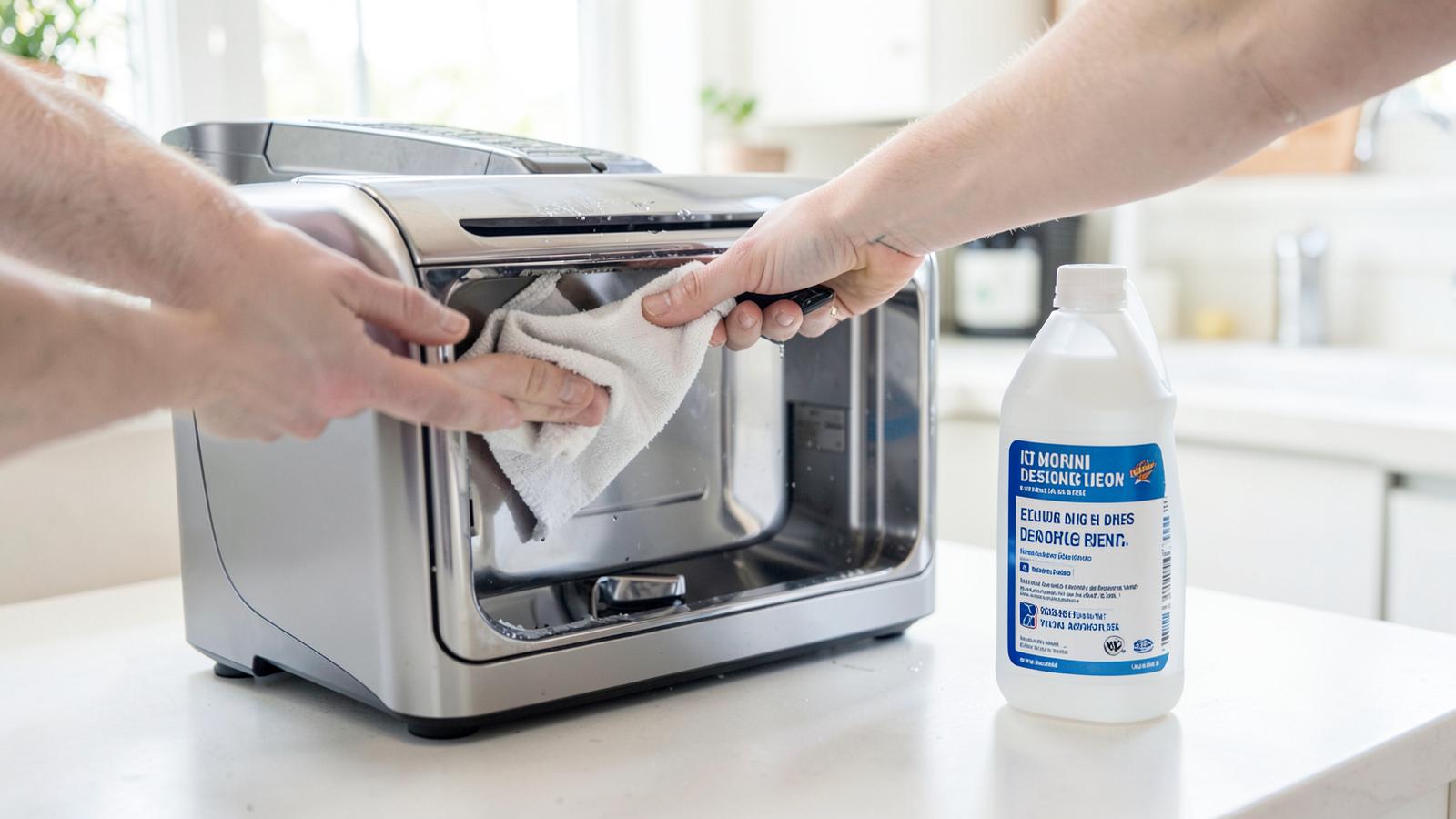
Countertop ice makers do not usually fail dramatically. They slow down: smaller ice, longer cycles, a stale smell, then an error code.
Almost all of that traces back to two things, scale and biofilm, and both are preventable. The guidance below follows manufacturer documentation for this class of appliance rather than any in-house testing.
The routine that matters
Empty and rinse the reservoir when the machine is not in daily use, rather than leaving standing water in it. Standing water is where the smell starts.
Run the machine's built-in cleaning cycle on the schedule in its manual, and more often if your water is hard or the machine lives somewhere warm.
Descaling in hard-water homes
Scale coats the chilled surfaces and narrows the ice path, which is exactly what makes cycles take longer and nuggets come out smaller.
Use the descaling solution the manufacturer specifies. Filtering the water you pour in helps at the source, which matters most in hard-water areas.
Draining and storing
Before storing a machine, drain the reservoir completely through the drain plug, wipe out the basket area and leave the lid open until everything is dry.
Storing a machine damp is the fastest route to a mouldy smell that no cleaning cycle fully removes.
Airflow and placement
These are compressor appliances and they reject heat. Pressed against a wall or boxed into a cabinet, cycles lengthen and output drops.
Leave clear space around the vents, keep the machine out of direct sunlight, and expect lower production on genuinely hot days regardless of model.
Frequently asked questions
Final verdict
Filtered water, a drained reservoir between sessions, and the cleaning cycle run on schedule. Those three habits do more for long-term ice production than any feature on the spec sheet.
About Our Research
TopPremiumPicks researches and compares products using manufacturer information, published specifications, reputable sources, retailer information and documented customer feedback.
How We Review Products